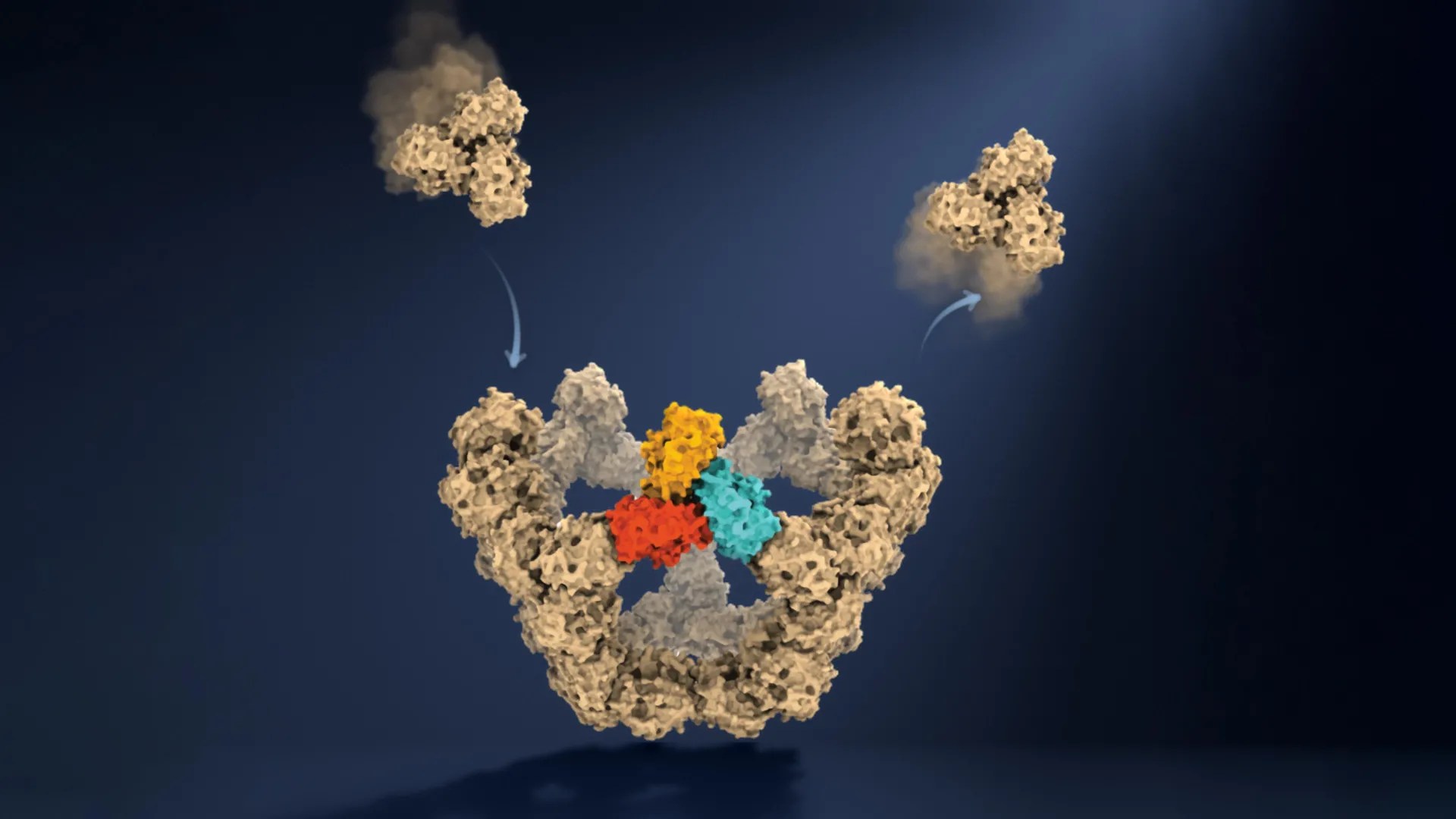
Researchers at Oxford used mass photometry to watch virus-like particles build themselves one molecule at a time. They found that proteins form weak, flexible connections that easily break apart, allowing the components to test different arrangements until stable checkpoints lock them into place. Once a closed pentagonal ring forms, subsequent growth accelerates because fewer valid assembly routes remain.
It is a clear look at how complex biological structures avoid getting trapped in dead-end configurations without any central director. While this study looked at an engineered particle of just sixty units, observing the intermediate stages directly opens a practical way to study how viral construction might be interrupted. We are still a long way from turning these observations into antiviral drugs, but understanding the physical rules of assembly is a necessary first step.
more: https://www.sciencedaily.com/releases/2026/10/261021231248.htm


Leave a Reply